

The Feel of What's Next
What Great Leaders Teach Us About Seeing a Market Before Everyone Else

By Nick Copping, Co-CEO
On one of our trips to Mexico, I watched Nobel Prize winner Richard Feynman turn an ordinary gas pump into a physics experiment.
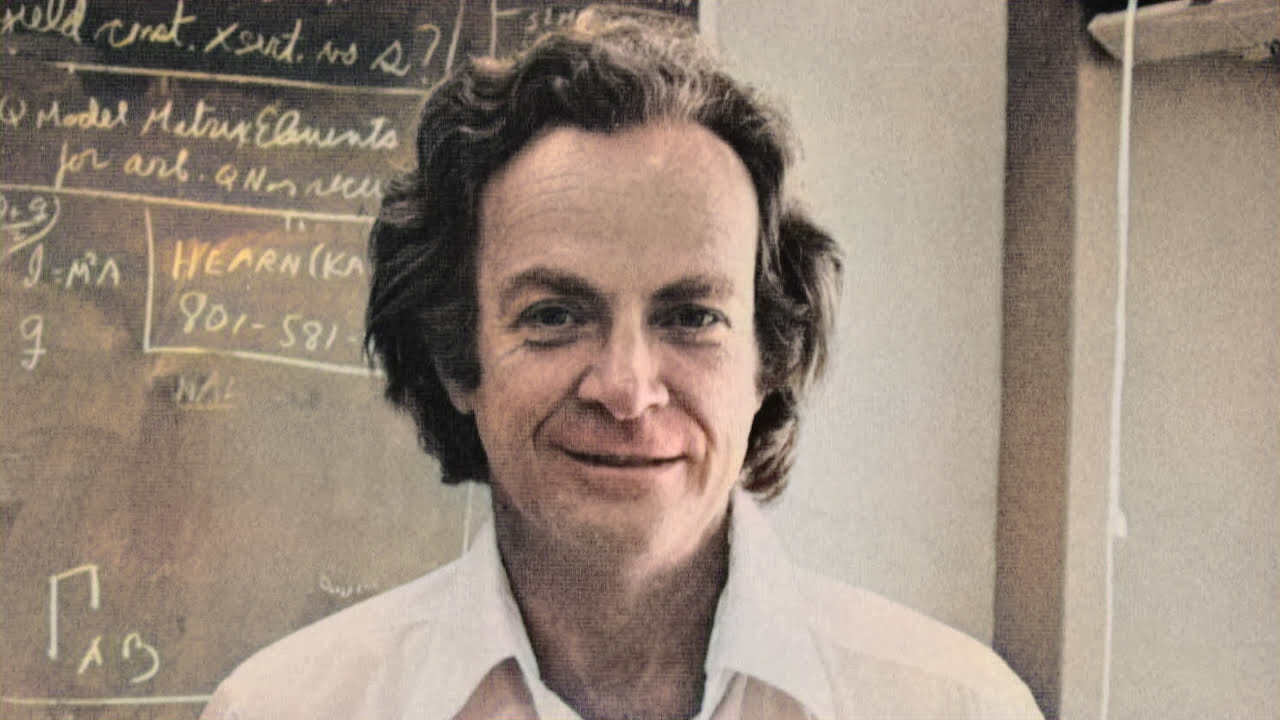
Richard Feynman
During my unforgettable years as a graduate student at Caltech, I had the rare privilege of studying physics, and occasionally traveling, with Richard Feynman and his family. This story begins on one of those trips to his beach house Casita Barranca in Playa La Misión, Baja California. We arrived at the station and before anyone reached for the pump, he turned to us with that grin and asked, "What number should I stop the pump at?"
We offered our best guesses, and each time he smiled and challenged us to be more accurate.
Then, instead of pumping gas, Richard studied the nozzle. He squeezed the handle gently, watched how it responded, and listened to the rhythm of the mechanism. He wasn't looking at a gas pump. He was getting a feel for the system hidden inside it.
After a minute or two he began pumping and stopped the flow exactly on the number he had predicted. Every time.
What struck me wasn't his precision. It was how he got there. The rest of us saw a gas pump. Feynman developed a feel for the system behind it.
He didn't just analyze systems. He immersed himself in them until their underlying patterns became tangible. Over time, he developed an intuition that looked almost magical from the outside, but was grounded in deep understanding.
Over my career, I have seen that same feel in the eyes of a handful of extraordinary technology leaders.
When ZOOM sat down with Snowflake Co-founder Benoît Dageville in 2016, we weren't simply learning about a better database story. We were listening to someone who could already feel enterprise data shifting.

Snowflake Co-founder Beniot Dageville
Benoit spoke about how Oracle had been designed before cloud computing and big data shifts occurred thus current product architecture made it difficult to innovate for these shifts. The architecture mattered, of course, but the larger shift mattered more. Data was moving to the cloud, separating from the old constraints of infrastructure, and becoming a strategic asset that could be shared and activated in entirely new ways. Snowflake helped turn that emerging shift into a market story the world could understand: The Data Cloud where it defined the shift which included instant elasticity, secure data sharing, per-second pricing and a cross-cloud architecture.
We experienced something similar with Co-founder and CEO Ali Ghodsi and Databricks. The conversation was never just about Spark, distributed computing, or a collection of technical capabilities. Ali could feel analytics, data engineering, machine learning, and AI converging. Years later, the market would know that convergence as the Data Intelligence Platform.
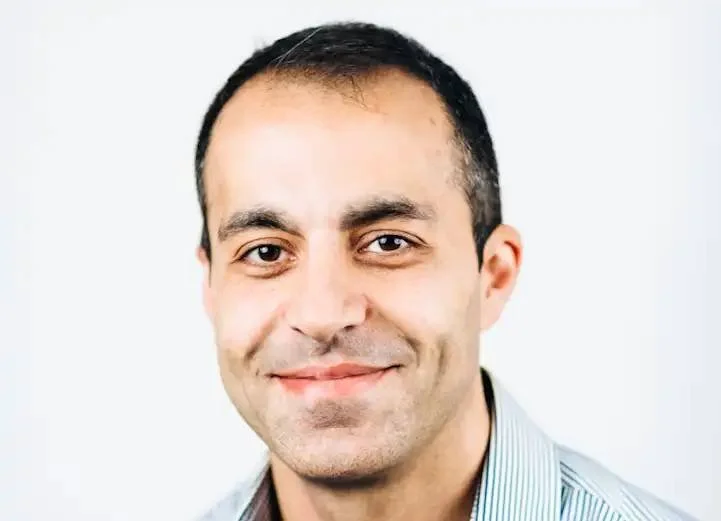
Co-founder & CEO Ali Ghodsi in Databricks’ early days
The technology came first. The feel came before the language. But the company that named the shift was positioned to lead it.
We saw that same pattern years earlier while working with TiVo founders Michael Ramsay and Jim Barton. Long before the market had language for what they were building, they sensed something fundamental was changing. Television would no longer revolve around the broadcaster's schedule. It would revolve around yours.
At first glance, TiVo looked like a better VCR. It recorded television programs without tapes and made them dramatically easier to find, pause, rewind and manage. But Michael and Jim knew they weren't simply building a better recording device. They were changing who controlled time in the living room.
That shift would eventually reshape the entire industry—from DVRs to on-demand streaming—because once viewers expected television on their terms, there was no going back.
That is what the best founders do. They focus less on what a technology is and more on what it is becoming.
A feel is not magic, nor is it a lucky guess. It is pattern recognition developed through deep immersion. It is what happens when someone lives inside a technology, a customer problem, or a market long enough to sense forces that are still invisible to everyone else.
It's tempting to think the breakthrough begins when someone names a new category. In reality, the opposite is true. By the time the name appears, the shift is already underway. A founder feels it. Customers begin experiencing it. Technology makes it possible. The market simply doesn't yet have the words.
That is the real work: finding the shift, defining what matters about it, expressing it in customer terms, and building a story strong enough for a company to own.
Sometimes the founder already has the feel. Sometimes the market signals reveal it. Usually it takes executive conversations, customers, analysts, competitors, and prospects to discover how customers are experiencing the shift, the words they naturally use to describe it, and what it will take for the broader market to recognize it. .
The winners are the companies that sense the shift, build the solution, name the new reality, and own the narrative.
That is the feel of what’s next.
What’s in your future?
Reach out to explore how our data-driven process can future-proof your positioning and propel your business to new heights.